Eyeflare - Travel Articles and Tips |

| Taking the Ghan Train, Australia Posted: 21 Nov 2011 01:00 AM PST 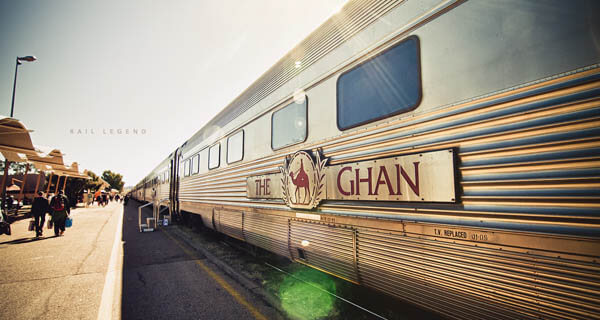 The “outback” of Australia is a fascinating place with lots of red-colored landscapes and lush green fields stretching out across the horizon. One great way to see the outback is by train, in particular the Ghan train. “The Ghan” was first a narrow gauge railway and only ran half way through the outback but in 1980 the railway was completely rebuilt on standard gauge rails and 2004 it was extended as far north as Darwin. It now runs 1,851 miles and takes three unforgettable days and offers an unsurpassed view of Australia. The railway was named after the Afghan cameleers who once used the route the train now takes. The Ghan usually runs twice a week from Adelaide in southern Australia to Darwin in the north. Due to the current financial crisis in the world the service has been reduced to weekly from November to March. The train makes stops at Katherine and Alice Springs, the midpoint of the route, to allow time for the riders to take optional tours. You can leave the train at any point to tour and hop back on thus making this an extraordinary opportunity to discover the countryside. At the northern end of route the area is tropical and the landscape is mellow. The middle in the Alice Springs area is considered the “red center” and this is the true outback. The far south end of the route is subtropical. The Ghan is a great way to see Australia, away from the big cities. Photo by [ embr ] on flickr This is originally posted at http://www.eyeflare.com/article/taking-ghan-train-australia/ Related articles:Air or train, which is better? Railorfly.com has the answer |
| Posted: 20 Nov 2011 01:00 AM PST 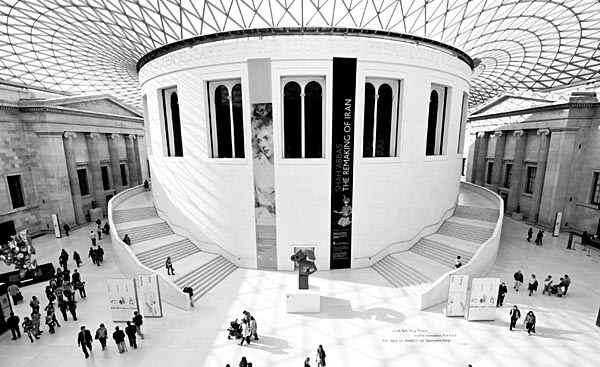 Located in the Bloomsbury District of London, The British Museum was founded by King George II in 1753. It was a collection of cultural art objects and antiquities bequeathed to him by Sir Hans Sloane in and consisted of approximately seventy thousand artifacts, books and specimens of natural history. Today the museum consists of seven million objects! Opened to the public in 1759, it was first located in the late 17th Century Montagu House which was on the site of the present museum building. Over the following centuries, it was expanded many times by the purchase and acquisition of 69 houses around it. In the late 18th Century, the museum’s notable antiquities began to arrive. Sir William Hamilton, a member of Parliament , antiquarian, archaeologist and British Ambassador to the Kingdom of Naples sold the museum his collection of Greek vases and other Greek and Roman artifacts. Captain James Cook and other explorers brought back objects from their South Sea voyages, while Clayton Mordaunt Cracherode, an English book and old master print collector, bequeathed the museum his engraved gems, coins, prints and drawings collection. Today the museum’s natural history collections are at the Natural History Museum in South Kensington and the books and manuscripts are at the British Library in St. Pancras.  Among other artifacts, the museum’s department of ancient Egypt and Sudan contains the Rosetta Stone and Cleopatra’s mummy; the department of Greek and Roman antiquities contains the Elgin Marbles from the Acropolis, along with the Mausoleum of Halikarnassos and Temple of Artemis, each of which are one of the Seven Wonders of the Ancient World. Other departments are the Middle East, Prints and Drawings, Asia, Department of Africa, Oceania and the Americas, Coins and Medals, Prehistory and Europe, Conservation and Scientific Research, Libraries and Archives, and the British Museum Press. For the convenience of visitors there are three eating places and a picnic area. The Court Restaurant, beautifully set under a glass roof, offers lunch, afternoon tea and dinner that includes many European classic dishes. The family friendly Gallery Café offers either light snacks or hot meals. Two Court Cafés offer sandwiches, salads and light meals. There are four museum shops, including a book shop, souvenir shop, culture shop for luxury items and replicas and a family shop offering children’s puzzles and games, DVD’s and educational items. One of the world’s largest museums, the British Museum covers seventy five thousand meters of exhibition space, with artifacts within representing the world’s cultures from the ancient to the modern. One hundred galleries are open and free to the public. British Museum address and hoursBritish Museum Free, open daily 10.00â€"17.30 Photos by juandiegojr (1) and Sean Munson (2) on flickr This is originally posted at http://www.eyeflare.com/article/british-museum/ Related articles:Tate Liverpool |
| You are subscribed to email updates from Eyeflare Travel Articles and Tips To stop receiving these emails, you may unsubscribe now. | Email delivery powered by Google |
| Google Inc., 20 West Kinzie, Chicago IL USA 60610 | |
No comments:
Post a Comment